 Reviews


 Proudly American


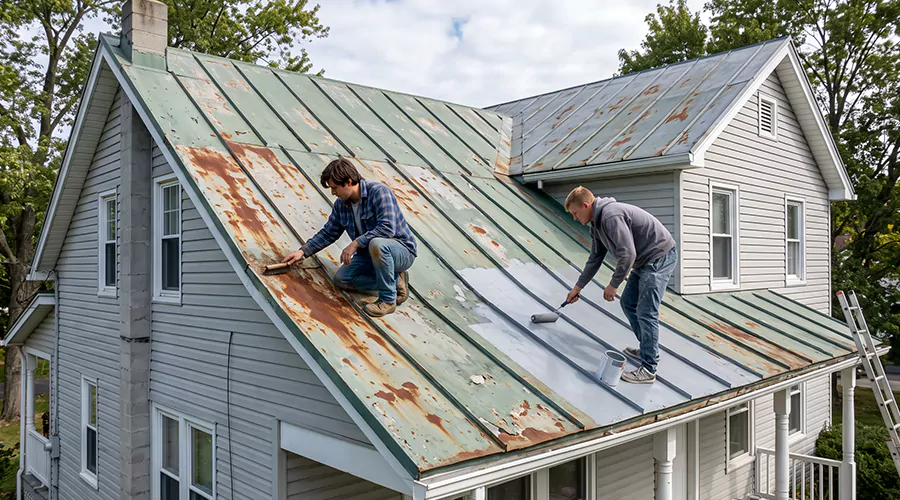
A metal roof should be restored when the panels remain structurally sound but show localized corrosion, loose fasteners, failing seams, worn coatings, or minor leaks. Smoke and water damage restoration may be needed when smoke or water intrusion has affected the roof or interior materials. Restoration is most useful before rust penetrates the metal. In 2026, coating-based metal roof work often costs less than full replacement when major panel damage is limited.
The key question is whether deterioration remains at the surface or has started weakening the panels.
What Does Metal Roof Restoration Include?
Metal roof restoration repairs defects before renewing the protective surface. Coating alone is not a complete solution when seams are open or corrosion is active. Preparation should remove contamination and address rust before the new system is applied.
A typical project can include:
- Inspecting panels and seams.
- Tightening or replacing failed fasteners.
- Repairing suitable penetrations.
- Treating localized corrosion.
- Cleaning and preparing the surface.
- Sealing compatible joints.
- Applying a roof-rated coating when appropriate.
Metal roof restoration should begin with repairs because a coating cannot stabilize loose metal or replace material lost to corrosion.
What Signs Mean a Metal Roof Needs Restoration?
Restoration is usually worth considering when wear is becoming widespread but the roof still feels structurally stable. Small rust spots or aging sealant are easier to address before holes develop.
Watch for:
- Faded or chalky coating
- Surface rust
- Loose exposed fasteners
- Failed sealant around penetrations
- Minor seam leaks
- Small isolated dents
- Water staining in the attic
- Previous repairs in several areas
- Coating peeling in limited sections
When is a Simple Repair Enough?
A local repair is usually enough when one penetration leaks or a small fastener area has failed. Restoration becomes more useful when similar problems appear across a wider portion of the roof.
| Metal Roof Condition | Better Starting Point |
|---|---|
| One loose fastener area | Local repair |
| Small isolated leak | Local repair |
| Limited surface rust | Treat and monitor |
| Widespread coating wear | Restoration |
| Many failing seams | Restoration or larger repair |
| Rust-through in many panels | Replacement may be better |
| Structural deck failure | Structural repair |
How Serious is Rust on a Metal Roof?
Rust can range from superficial oxidation to actual loss of metal thickness. Surface corrosion can often be treated. Deep corrosion can weaken a panel enough that coating it no longer makes sense.
Look for:
- Orange or brown surface spotting.
- Flaking metal around fasteners.
- Pitting that catches a fingernail.
- Small holes at old penetrations.
- Rust returning through earlier repairs.
- Soft or weakened panel edges.
Metal roof restoration works best before corrosion progresses to holes or major section loss.
Why Do Seams and Fasteners Matter?
Temperature changes can loosen fasteners or stress sealant around joints. Small openings can then allow water below the roof surface.
If many fasteners are backing out or several seams have opened, a broader restoration plan may be more practical than repeated spot repairs.
When is a Metal Roof Too Damaged to Restore?
Restoration is a poor choice when corrosion has removed significant metal or structural components below the panels are failing. A coating can protect stable metal but cannot rebuild missing panel thickness.
Replacement deserves stronger consideration when:
- Rust-through affects many panels.
- Large holes are present.
- Panel edges have lost strength.
- Roof sections sag.
- Decking below is deteriorated.
- Leaks continue after repeated repairs.
- Widespread panel movement is present.
- Structural framing needs repair.
How Much Does Metal Roof Restoration Cost?
Cost depends on roof size and how much preparation is needed. Coating for suitable metal roofs can commonly range around $0.50 to $4 per square foot in 2026 before extensive repairs. Rust treatment or seam work can increase the total.
Roof restoration cost is higher when old coatings must be removed or many fasteners need replacement.
| Work Needed | Effect on Cost |
|---|---|
| Cleaning and inspection | Lower |
| Light corrosion treatment | Moderate |
| Fastener replacement | Moderate |
| Seam repair | Moderate to higher |
| Large coating removal | Higher |
| Panel replacement | Much higher |
How Long Can Restoration Extend Metal Roof Life?
A suitable restored metal roof can often gain about 10 to 20 years before another major treatment is needed.
A roof with active rust beneath the coating will have a much shorter result.
What Can You Check Yourself?
A ground-level inspection can reveal many useful signs without walking on metal panels. Binoculars can help with larger roofs.
Check for:
- Obvious rust patches.
- Missing fasteners.
- Open-looking seams.
- Peeling coating.
- Bent panel edges.
- Debris blocking drainage.
- Interior stains after rain.
- Damp attic insulation.
Take photographs from the same safe location every six months so changes are easier to compare.
When Should You Call a Professional?
Professional assessment is useful when corrosion is widespread or leaks appear in several areas. Walking on a metal roof can also be hazardous when panels are wet or steep.
Consider professional help when:
- Rust has created holes.
- Several seams leak.
- Many fasteners are loose.
- Roof sections appear uneven.
- Decking may be wet.
- Coating has failed across large areas.
- Previous repairs keep failing.
How Can You Delay the Next Restoration?
Routine maintenance protects exposed metal before minor defects become corrosion points.
Use these habits:
- Inspect the roof twice a year.
- Check after severe storms.
- Keep drainage paths clear.
- Address scratches in protective coatings.
- Correct loose fasteners promptly.
- Repair small seam defects early.
- Limit unnecessary roof traffic.
Conclusion
A metal roof should be restored when corrosion and coating wear are still repairable and the panels remain structurally sound. Surface rust or loose fasteners can often be addressed before they become holes. Restoration becomes less useful after widespread rust-through or deck failure develops. Track visible corrosion over time and check for interior leaks. If deterioration is widespread, professional assessment can determine whether restoration or replacement offers the better result.
Frequently Asked Questions
Can a rusty metal roof be restored?
Yes, when rust is mainly at the surface and the remaining metal is still sound.
How long can metal roof restoration last?
A suitable coating-based restoration can often add about 10 to 20 years of service.
Can roof coating stop an active leak?
A coating should not replace repair of open seams or damaged penetrations. The leak source should be corrected first.
Does every faded metal roof need restoration?
No. Fading alone may be cosmetic when the protective system still performs properly.
Can severely rusted panels be coated?
Panels with major section loss or holes usually need repair or replacement before any broader coating work.
How often should a metal roof be inspected?
Twice yearly is a useful general schedule, with another check after severe storms.